In the May 20th blog entry, “Why I Love My Job” I told you that in grade 5 I switched my career goal from writing to teaching. I didn’t tell you why.
In grade 3 and 4, I was a writing star. I shared stories with my grade 3 class during show and tell, and I know I kept them on the edge of their seats with my brilliant prose. In grade 4 I won a Mother’s Day contest with a poem I’d written. My star was on fire. I had nothing but confidence in my skills as a writer.
In grade 5, I shared a poem I’d written with my school librarian, Mrs. Alex Harbottle , and she suggested I send it in to a magazine. She recommended a children’s poetry journal called Jabberwocky. I sent off my poem. In due course, I received a letter back from them. Heart thudding with joyful anticipation I opened the envelope, and pulled out my first rejection letter.
Oh, it was a kind and thoughtful letter. My poem, the editor said, was too mature for their journal. It was a lovely poem, and I should send it on to an adult poetry magazine or a religious magazine. They thanked me for my submission and hoped I would send them something else another time.
I was shocked. I was 10 years old. Why would my poem be of interest to adults or the audience of a religious magazine? I couldn’t deal with their suggestion, and so I shut that door.
Don’t get me wrong, I was still writing poetry. Just ask the boys who captured my interest and received beautiful hand calligraphied books dedicated to them! I also wrote articles and a library column for the school newspaper. That was just the end of looking for public approval until college when I discovered my fiance (who was NOT a writer) was going to enter a piece into the writing award. I couldn’t have that! It was only 2 or 3 hours to deadline, but I borrowed a typewriter, invented a story on the spot (typing very poorly!) and managed to win the prize. It paid for his wedding ring. That could have been enough to inspire me to start sending out my words again, but it wasn’t. I used them up on babies and students instead. Two decades playing with the words of others at home and in a classroom.
Then I wrote a novel. And another.
So now, after many years, I’m sending my words out for others to assess and to determine if those words can make them money and generate an audience for their company. I’m sending off queries and talking to publishers. The rejection letters are due.
I think I can handle it. I did all right after 6 months of discussion with an agent led to the first rejection e-mail. I wasn’t crushed. I simply thought, “We’re just not the right fit.” (though I regret not letting her know I had a publisher indicate interest in the manuscript!) I was simply astonished when another query was returned with a “we have too many things on the pile at the moment, can you re-submit this later?” note. (Note to self- possible area of career demand-literary agent). No devastation. No urges to commit suicide by letter opener as a result of another crushing blow. So far so good.
I’m trying to re-frame the name. They’re not so much ‘rejection letters’ as new opportunities to explore, right? They’re not about me and my words, necessarily, they can be about what fits with the company and their needs. Publishers a’re businesses, after all. They have to find product that matches with their vision. It’s not personal. It’s just business. But those words I’ve sent out there are my babies, and I want them to be well-liked and find friends who will help them become all they can be.
I’m trying to feel brave as I send my words out. I hope they’ll be received well.
Last year, in response to a joyful email note I’d sent upon initial interest by an agent in Grace Awakening, an old, dear friend (who was beneficiary of a few of those calligraphied poetry books once upon a time) wrote, “You’re a writer. You’ve always been one.” It makes me weepy whenever I consider his simple assertion of this identity for me. One rejection letter in my youth made me doubt that this was my calling, but I’m claiming it again.
I am returning to the childhood quest, Mrs. Harbottle, because I am a writer.

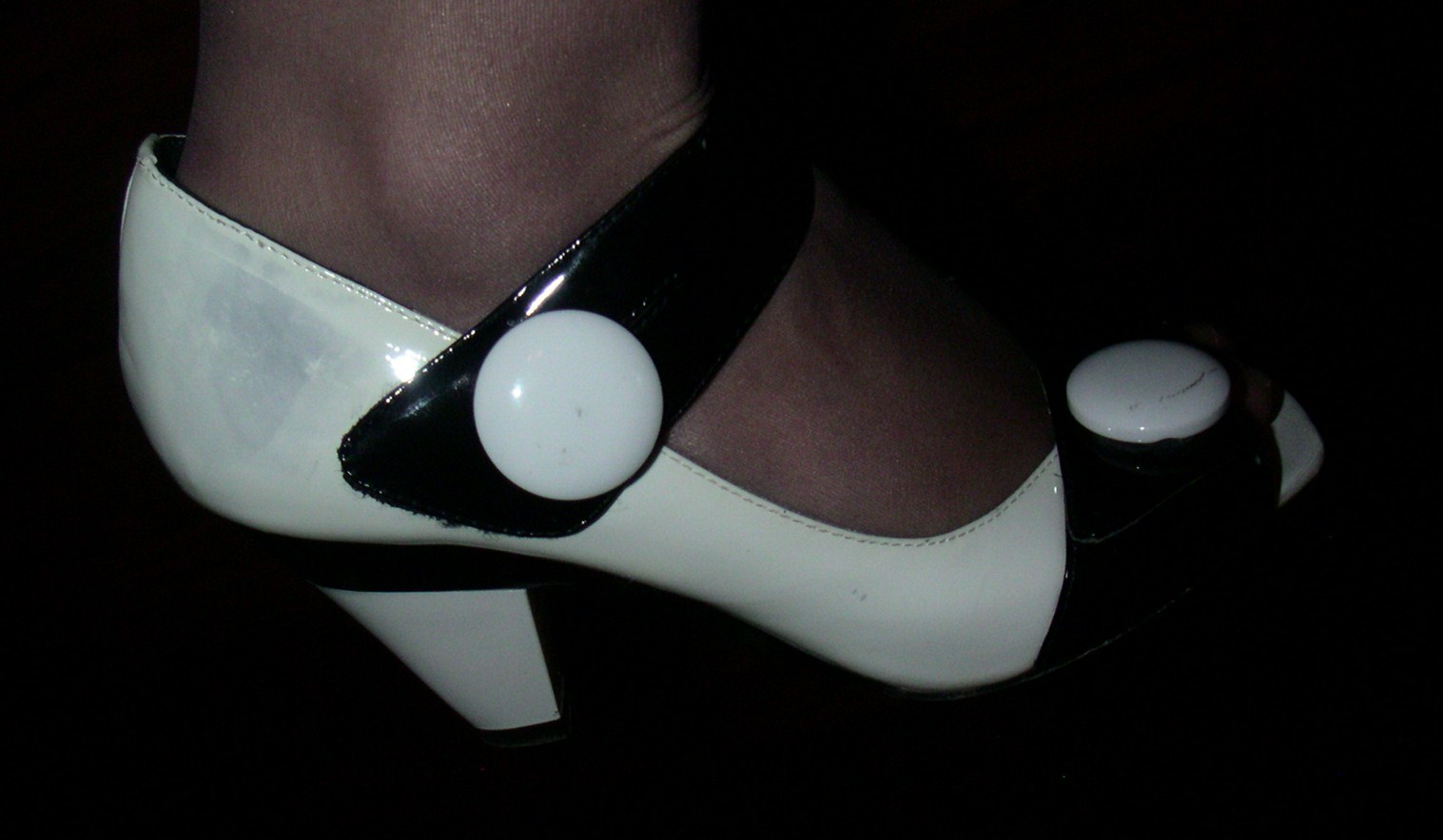 he discussion, and the head is busy processing the information and asking intelligent questions. Those shoes were not the smart girl with her hand in the air, they were the cheer leader in the back driving the teacher – or moderator – crazy with her giggles.