Shawn L. Bird

Original poetry, commentary, and fiction. All copyrights reserved.

exempli gratia July 9, 2012

Filed under: Teaching,Writing — Shawn L. Bird @ 9:47 am
Tags: , , , ,

e.g.

So, I was pondering “e.g.” today.  I know, of course, that the translation of this Latin abbreviation is ‘for example’  but I was wondering if ‘e’ is for ‘exempli’ what is the ‘g’ for?

Guess.

Just guess.

Yeah.  It’s GRATIA.  Seriously.

So then I had to look at ‘gratia’ again.  Google translator tells me it means ‘of.’  My mind is beginning to boggle.  So here is what Google says the Latin word ‘gratia’ is all about.  It’s absolutely ubiquitous!  It’s a very all-purpose, wonderful word.    It’s a noun with 25  interpretations.  It’s a conjunction .  It’s 3 prepostions. ( “of” is a preposition.  Notice that it’s not on the list).

Exempli, on the other hand, is very specific.  One meaning.  Just ‘example.’

Now.

Go through the list below of interpretations of ‘gratia’ and put ‘example of’ in front of each one.  Suddenly those two little letters become rather profound.

Words are fascinating.

noun
GRACE GRATIA, LEPOS, LEPOR, VENUS, VENUSTAS, DECOR
FAVOR
PLEASINGNESS GRATIA, LEPOR, LEPOS, LIBITA
PLEASANTNESS AMOENITAS, JUCUNDITAS, IUCUNDITAS, GRATIA, DULCITUDO, DULCEDO
FAVOUR
CHARM DELICIAE, GRATIA, VENUSTAS, VENUS, IUCUNDITAS, JUCUNDITAS
LIKING GRATIA, APPROBATIO, FAVOR, LIBIDO, LUBIDO
GOODWILL GRATIA, ADFECTIO, AFFECTIO, AFFECTUS, AEQUANIMITAS, ADFECTUS
ESTEEM HONOR, HONOS, CARITAS, DIGNATIO, DIGNITAS, GRATIA
GRATITUDE GRATIA, GRATUS ANIMUS, GRATITUDO, PIETAS
LOVE AMOR, COMPLEXUS, ARDOR, CONPLEXUS, FLAMMA, GRATIA
APPROVAL APPROBATIO, COMPROBATIO, CONPROBATIO, PROBATIO, CONCORDIA, GRATIA
SUPPORT SUBSIDIUM, CONATUM, AUXILIUM, SUPPETIAE, SUBPETIAE, GRATIA
POPULARITY STUDIUM POPULI, FAVOR POPULI, GRATIA
THANK GRATIA
SERVICE OPERA, BENEFICIUM, SERVITIUM, ADMINISTRATIO, MINISTERIUM, GRATIA
THANKS GRATES, GRATIA
REGARD RESPECTUS, CURA, CARITAS, HONOR, HONOS, GRATIA
ACKNOWLEDGMENT AGNITIO, GRATIA, CONFESSIO
EARNING GRATITUDE GRATIA
FASCINATION FASCINATIO, LEPOR, LEPOS, GRATIA, MEDICATUS
PARTIALITY FAVOR, GRATIA, CUPIDITAS, INIQUITAS, STUDIUM
AFFECTION AFFECTUS, CONATUM, AFFECTIO, ADFECTIO, GRATIA, BENEVOLENTIA
FRIENDSHIP AMICITIA, AMICITIES, SODALITAS, NECESSITAS, NECESSITUDO, GRATIA
AUTHORITY AUCTORITAS, POTESTAS, POTENTIA, LICENTIA, IUS, GRATIA
preposition
TO IN, USQUE AD, USQUE, GRATIA, INDU, ERGA
IN FAVOR OF GRATIA, PRO, PROD
FOR THE SAKE OF OB, CAUSA, GRATIA, ERGO, PER
conjunction
IN ORDER TO GRATIA
 

One glance at a book… July 8, 2012

Filed under: Commentary,Reading,Writing — Shawn L. Bird @ 9:15 am
Tags: , ,

Ah, the adventures we walk into when we open a book!

Skipping Stars Productions LLC's avatarSkipping Stars Productions LLC

View original post


literary immortality July 6, 2012

I’ve been spending the last few days transcribing my copy of Susanna Dobson’s Life of Petrarch (1777) and as I plug away on the typing I am musing on immortality.

The other day I alluded to and listed Shakespeare’s “Sonnet 18,” and as I read it, I am thinking of the comparison between Will’s unknown inspiration, and Petrarch’s Laure.  Here’s that sonnet again:

SONNET 18

Shall I compare thee to a summer’s day?

Thou art more lovely and more temperate.

Rough winds do shake the darling buds of May,

And summer’s lease hath all too short a date.

Sometime too hot the eye of heaven shines,

And often is his gold complexion dimmed;

And every fair from fair sometime declines,

By chance, or nature’s changing course, untrimmed;

But thy eternal summer shall not fade,

Nor lose possession of that fair thou ow’st,

Nor shall death brag thou wand’rest in his shade,

When in eternal lines to Time thou grow’st.

So long as men can breathe, or eyes can see,

So long lives this, and this gives life to thee.


The immortality happens in the closing couplet.  So long as men can breathe, or eyes can see, So long lives this, and this gives life to thee.  “This” is, of course, Will’s poem.  He claims that he has made his beloved immortal by describing her (or him) in this poem.  The immortality has limited value, being as we have no idea of whom he was speaking, but the moment of loving adoration is captured for all time.

Petrarch is a little more specific.  He names his love, and of course, the people of his time knew exactly who she was.  He calls her Laure, and his poetry abounds with symbolism of the laurel.  A crown of laurels was (and still is) a mark of distinction. Petrarch believes she is his crown and his success.  History (particularly the Abbé de Sade in his Mémoires sur la vie de François Pétrarque, 1764) records her as Laure de Noves, wife of Hugues de Sade.  (In English, we call her Laura).

Here is Petrarch’s Canzoniere 6 which shows a play on the laurel at the end:

Now so depraved is my poor fool, desire,
To persecute this lady, turned in flight,
Unloosed of Love’s entrapments, footing light,
Ahead of my slow run he flies. Prior

To my objections, by the roads most dire,
The more I call, the more he takes to flight;
Restraint is weak, nor has the spur its bite
When Love and nature in him do conspire.

And then he grasps the bridle to direct
The way, and takes me for a vassal, hastes
Post-haste, as though to death, my worsened state

To reach at last the laurel and collect
The bitter fruit of others’ plagues, the tastes
That grieve one more, unless they consolate.

(trans.  “Hypocorism” on Yahoo Answers)

This poem is echoing the section that I’m transcribing at the moment.  Laura is being stalked.  Petrarch follows her about Avignon, gazing dreamily at her or trying to talk to her.  She covers her face and takes off in the other direction.  You can almost hear her running steps while Petrarch shouts rhyming verses extolling her beauty.  It’s a wonder her hubby Hugues didn’t call him out and beat him to a pulp!  (Now that’s an interesting scene, isn’t it?  Hmm.  Expect to see something along those lines).

The summary of this vague sort of comparison between Will and Francesco is that  to truly be immortalized, the beloved needs a name, and a personality.  Laure seems far more real than Will’s anonymous beloved.  While Laure is busy running in the opposite direction, pulling her veil over her head, and trying to maintain her virtue against the onslaught of Petrarch’s devotion, Will’s beloved is a static object, simply receiving affection and adoration.  There is no sense of individuality.  Nonetheless, the love does become immortal because it is recorded.  Words are powerful.

Here’s an afterword by poet Jacopo Sannazzaro   (1458–1530).  A hundred years earlier, Petrarch had lived at the spring that is the source of the Sorgue River, writing his canzonieres to Laura beneath the limestone cliffs that echo with the burbling of the river.

Sorgues, the River  Laura de Sade

THE NYMPH by Sorga’s humble murmurings born,

Illustrious now on wings of glory soars;        

Her high renown its awful echo pours           

Wide o’er the earth. Splendors like these adorn        

Her, destined, in her modest beauty’s morn,          5

To charm the eye of Petrarch. Her the doors 

Of fame’s proud dome enshrine; the radiant stores   

Of fancy blaze around her; nor does scorn    

On her low birthplace and obscurer tomb      

Glance a triumphant scowl. What suns illume                    10

With lustre like the Muse? How many dames,          

Wise, chaste, and lovely, of distinguished race,        

Have slept in death forgotten, lost their names,        

While hers from age to age beams with still heightened grace.         

(Trans. Capel Lofft)

Indeed.  The words craft immortality; the love brings fame.

This image is popularly considered to be Laure de Noves de Sade, beloved of Petrarch, though the Musee Petrarque in Fontaine de Vaucluse asserts that there are NO verified pictures of her, most being painted years after her death.


etymology June 28, 2012

Filed under: Commentary,Teaching,Writing — Shawn L. Bird @ 3:34 am
Tags: , ,

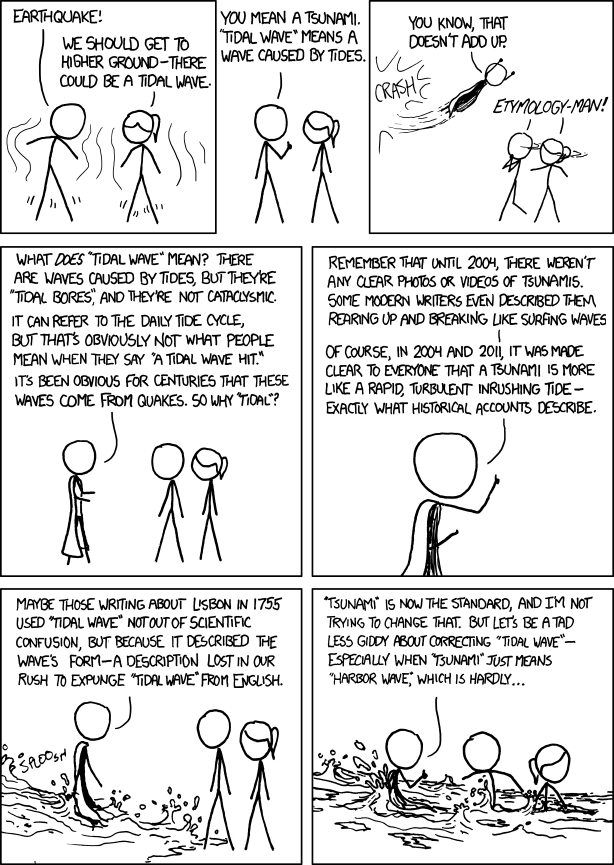
Now, it might just be because I’m a nerdy English teacher, but I LOVE word etymology.  I find it quite fascinating to explore the history of word origins.  Imagine my delight to find a comic that shares some of this fascination!  Check out a chapter in the life of Etymology Man from xkcd.com!


forever June 23, 2012

Filed under: Mythology,Writing — Shawn L. Bird @ 8:55 pm
Tags: , , , , , ,

“No measure of time with you will be long enough, but let’s start with forever.”

Edward’s wedding  speech

Twilight Breaking Dawn (pt 1)

Having just finished draft two of Grace Awakening Myth, this whole “I’ll love you forever, if all those evil doers keep out of my way long enough” thing has been on my mind.  Is it easier to love someone forever when you have to keep fighting for them?  If someone is just always ‘there’ and not at risk, is it too easy to take them for granted?

Here are Bella and Edward at their wedding, finally everything is going their way, but no one gets happy ever after at the beginning of a book.  Forever has to work through adversity.


The value of poets June 21, 2012

Filed under: Poetry,Writing — Shawn L. Bird @ 1:42 pm
Tags: , , , , ,

Discovered this great quote on the blog “Greater Umbrage”

“You see, in the beginning was the Word. And the Word was made flesh in the weave of the human universe. And only the poet can expand this universe, finding shortcuts to new realities the way the Hawking drive tunnels under the barriers of Einsteinian space/time… To be a true poet is to become God.” 

~ Dan Simmons

Wow.  It makes me feel crazily powerful!  How daunting.  How magnificent.  How humbling!


6 tips for self-editing from Jerry B. Jenkins June 19, 2012

Filed under: Commentary,Writing — Shawn L. Bird @ 1:26 pm
Tags: , , , , ,

In the Writer’s Digest video, How to Become a Ferocious Self-Editor,  author Jerry B. Jenkins  recommends that in order to be publication ready, every author needs to intensely self-edit.  He advises that you should,

  • make every word count
  • pay attention to your dialogue
  • avoid hackneyed language and situations
  • get quickly to your point
  • maintain one point of view
  • resist the urge to explain

I’ll be watching for these as I’m going over draft two of  Grace Awakening Myth (aka Book three) this week.  What are you self-editing these days?


heat in the band room June 14, 2012

The latest snippet from Grace Awakening Myth

Things are heating up in the band room!  (Ben is narrating).

.

Ryan came in.  “Did you see Tanis?”   His eyes were wild.

“When?”

“Today.  She’s wearing something.”

“I should hope so.  Otherwise she’d be arrested.”

He shook his head, as if to shake out an image, “No, I mean, she’s wearing some…thing.  Ahhh.”  He shook harder, then hissed, “Look!”

Tanis sauntered in.  She was definitely wearing ‘something,’ all right.  Skin tight.  Mini-dress.  Black leather.

Ryan cast a frantic look over to Mr. J.  Mr. J glanced back and raised an eye brow.

Paul came in, grinning.

Tanis glanced over her shoulder and then bent over.

Paul sucked in his breath.

Ryan gulped.  Loudly.  Like he had swallowed his tongue.

“Tanis,” Mr. J called.  “I need to see you over here, please.”

She grinned at us, our jaws hovering somewhere around our navels, and gave a little shoulder wiggle as she passed us.

Mr. J spoke to her quietly.

She shrugged and left the room.

He came over to us.  “For whose benefit was that display, gentlemen?”

“I…uh…well…” Ryan stuttered.

Paul twitched, but didn’t seem to have the capacity of speech anymore.

I inhaled.  “It’s complicated, sir.”


Modern pict, in miniature June 11, 2012

Filed under: anecdotes,Writing — Shawn L. Bird @ 9:40 pm
Tags: , , , , , , , ,

NB.  Beaufort is pronounced Byoo-furt in this one.

Just a snap shot in words.

.

“Beaufort T. Scott!  Is that your mama’s blue eye shadow all over your face?” Sadie looked again and rammed her hands onto her hips, elbows jutting out menacingly.  “And why on Earth are you wearing your sister’s skirt?

“It’s not a skirt!  It’s a kilt.  Kilts are for men.  Mama says so!”  He thrust his tongue out to emphasize the point.

“It’s a gingham skirt with a calico ruffle, Beaufort.”

His lower lip quivered.  “It’s a kilt!”

Joline’s kitten pounced by, narrowly missing a lucky grasshopper.  Beaufort bent over to examine it, demonstrating that he was wearing his ‘kilt’ in the traditional manner.

Sadie raised an eyebrow.  “Careful that cat doesn’t reach up and slice off your privates.”

In alarm, the little boy swooped up the cat and dangled it protectively over the privates in question.

Sadie bit back a laugh.  The poor little cat looked for all the world like a pipe major’s badger sporran hanging there, tail twitching between the little boy’s knees.

“Ah, Beaufort,” she sighed.  “You’ll be the death of me.”


sewing with words June 10, 2012

Filed under: Grace Awakening Myth,Writing — Shawn L. Bird @ 6:20 pm
Tags: , , , , ,

When I write, I craft individual scenes.  When I have enough of them, I sort them out and put them in order, then I write the ‘in betweens’ that fill out the plot and ensure comfortable transitions, proper development of tension, etc.  After than comes the editing and additional padding or trimming that make things tidy.

It’s a bit like making a quilt of words.   First are the blocks, individual chunks, that are arranged into an attractive pattern.  They don’t stay together, though until they’re backed, and stitched down.

So, I’m quilting the final stitches in the third book of the series, Grace Awakening Myth today.  I think I’ll be done by bedtime.   Then off it will go to the first round of beta readers who will see if they find any holes in the structure and composition.  I’ll darn up what I need to, and then it will head off to the editor, who will trace the pattern for the final quilting.  When it’s all done, the next adventure will begin!

Another couple thousand words to stitch, and this word quilt will be done.